
Expert perspective on empathy, body language, and delivery — by Shri Vasudev Murthy
DEBATE EXCELLENCE : POINTS TO PONDER
The origins of debate
You have probably read about the origins of debate. It's possible they had roots in ancient Greece and India.
The subjects could be philosophy, aspects of spirituality, science, politics, diplomacy, or anything else where there were multiple perspectives.
Presumably, the idea was to put across a point of view, combining the elements of carefully chosen words, facts, rebuttals, passion and authenticity.
You won a debate if the cumulative effect persuaded most of the audience.
This sounds reasonable.
Beyond winning credentials
The young debater faces an additional challenge. As the canvas of our understanding of multiple subjects expands, there is this business of personality development and adding to one's formal credentials by participating in and "winning" debates.
Once this becomes overly competitive, it is possible that certain other idealized objectives become secondary.
I suggest that these three perspectives be thought about.
Three perspectives every young debater should ponder
Show empathy before you argue
We learn in the field of negotiations that one of the best ways to get what you want is to seem to yield to the opposite argument. We are speaking of the display of empathy to the other's perspective. After all, all debates are not binary. There is some element of logic in what the other person is saying. It would be appropriate to acknowledge the validity of the other point politely, even if you plan to then say "but". It makes a debater seem reasonable and cultured.
Acknowledging the other side does not weaken your position — it signals maturity. Judges notice participants who can engage with complexity rather than treating every round as a binary win-or-lose confrontation.
Master your body language
Body language is an intrinsic part of this exercise as non-verbal communication is critical. Facts and figures, rhetoric and carefully architected arguments can prevail over body language. An unconscious shaking of your head, a sneer, an overly relaxed posture, yawning, an unsmiling demeanour and so on, immediately detract from the potency of whatever was previously put forward.
Judges watch these things via their peripheral vision and are affected by it. They convey to the judge that the debater lacks the ability to be civil and courteous. Therefore, be very aware of your body language.
Study your delivery
Delivery is something to be studied. Are you speaking loudly? Too softly? Too fast? Do you stumble and use word crutches? If so then you are likely to be losing your impact on the judges, irrespective of how persuasive your arguments are.
You may wish to consider recording yourself and studying how you project your voice and speak. Outstanding delivery, positive body language and the demonstrating of genuine empathy can be your secret weapons.
Winning at all costs ought not to be your objective.
You may win the battle but not the war.
You might win the debate but may lose goodwill and genuine appreciation from those whose opinion truly matters.
What do you wish for?
Outstanding delivery, positive body language and the demonstrating of genuine empathy can be your secret weapons.
Why empathy works in debate
In negotiations, yielding to the opposite argument — even briefly — often opens the door to persuasion. Debate is not always binary. When you acknowledge that there is logic in what the other person says, you appear reasonable and cultured.
What judges notice beyond your arguments
Whole-person evaluation
Verbattle judges assess language ability, clarity, public speaking skills, and the debater's conduct on stage — not just the strength of arguments.
Empathy signals maturity
Acknowledging the validity of an opposing point before saying "but" makes a debater seem reasonable and cultured. Judges notice participants who engage with complexity.
Non-verbal cues matter
An unconscious head shake, sneer, or unsmiling demeanour detracts from even the most persuasive rhetoric. Judges watch these through peripheral vision.
Delivery under time pressure
With one minute per round in Verbattle, filler words and unclear articulation cost impact. Record yourself and study your projection before competition day.
Before you reach the Verbattle stage
- Review the debate format for your category — Beginner, Junior, Senior, or Kannada — before Zonal Clamber or Skirmish.
- Practice with your mentor seated beside you, as they will be on stage during Verbattle rounds.
- Rehearse acknowledging the opposition's point before delivering your rebuttal — "I understand your point, but…"
- Record a practice round and review your body language, pace, volume, and word crutches.
- Share this article with your teammate so both members align on empathy, delivery, and stage presence.
- Read the Debate FAQs for judging criteria and the Competition Process for round-by-round expectations.
For mentors
- Mentors sit beside participants on the Verbattle stage — your composure influences how judges perceive the team.
- Coach students to maintain eye contact with judges and opponents, not just their notes.
- Remind debaters that winning credentials should not eclipse the idealised objectives of civil discourse.
- Use mock rounds to practice the three perspectives: empathy, body language, and delivery.
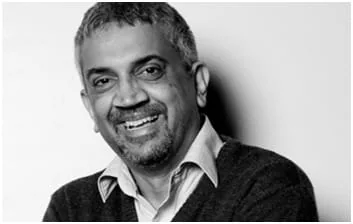
Shri Vasudev Murthy is a writer, violinist, yoga enthusiast and serves as an adjunct Professor of Management at a number of top management schools. He is the Managing Partner of Focal Concepts, a leadership training firm. His background includes degrees from IIT Roorkee, Florida State University and Southern Methodist University, Dallas, TX.
Outstanding delivery, positive body language and demonstrating genuine empathy can be your secret weapons. You may win the debate but may lose goodwill from those whose opinion truly matters.— Shri Vasudev Murthy
Continue your debate preparation
Read the FAQs for judging criteria, study the format for round structures, and understand the full competition process before you register.